Applications of AI in IW
The convergence of artificial intelligence (AI) and non-kinetic irregular warfare (IW) represents both a qualitative shift in the nature of strategic threat and a quantitative increase in adversarial operational effectiveness. To be sure, IW has always relied upon exploitation of asymmetries of expectation, capability, attribution, legality, and response thresholds. Certainly asymmetries, and tactics like indirect approaches (e.g., employing covert and clandestine and non-kinetic operations) are factors in both regular warfare and IW. AI affords unprecedented capacity to operationalize these asymmetries and tactics at scale, and when employed within IW (often within a paradigm of “matrix operations” to coordinate exceedingly large number of participants in/across vast networks), can afford speed and precision to enable minimal cost (of resources and personnel) and augmented effectiveness of such engagements. Indeed, current peer competitors and state adversaries have explicitly recognized that strategic objectives can be achieved through persistent sub-threshold engagements that avoid triggering conventional military retaliation.
For example, the People’s Republic of China (PRC) articulates this premise in its doctrine of “unrestricted warfare” that advocates the integrated use of informational, psychologic, economic, and legal means to compromise competitors’ strategic postures without the need for kinetic confrontation. Similarly, Russia employs the doctrine of reflexive control, in which manipulated information and distorted perception are employed to shape adversarial decision-making in ways that are advantageous to Russian tactical positioning and strategic objectives. Iran has refined a layered model of proxy influence, social messaging, and deniable cyber engagement that exploits ambiguity, delay, and attributional uncertainty. In each of these applications, AI-enabled non-kinetic IW serves as a principal vector of strategic competition.
This is no longer simply propaganda in a modernized form. Rather, these are algorithmically mediated cognitive campaigns to shape what targeted populations’ perceptions of what is true, what are pressing threats, who and what institutions can be trusted, and what actions may be regarded as necessary and/or justifiable in light of these perceptions. In this way, AI allows non-kinetic IW to become adaptive, recursive, and self-improving. Thus, adversarial campaigns need not rely on disinformation alone; they can employ more nuanced, personalized, and contextually plausible distortions that are far more difficult to detect, define and counter.
Implications
The readiness implications are profound. In the current geo-political environment, military effectiveness is not solely dependent upon weapons systems, force numbers, or logistics; it is equally contingent upon morale, organizational cohesion, confidence in leadership, institutional legitimacy, and the social trust that enables sustained operational commitment. AI-enabled influence operations can directly target each of these variables. Narratives designed to amplify perceptions of institutional corruption, leadership hypocrisy, inequity of burden, or missional futility can erode both the willingness of current and prospective military personnel to serve, and of the home populus to support military action.
This is a critical point: in IW, perception often achieves operational effect before factual correction can occur. AI compresses the temporal interval between narrative creation and dissemination to near-zero, thereby exploiting the latency inherent in bureaucratic verification, official response and target population effect. Often, the objective is not to convince a target that a falsehood is true, but rather to convince the target that truth itself is uncertain, authority unreliable, and cooperation is untrustworthy. This can render vulnerable and enable more effective targeting of alliance architectures. Allied cohesion depends upon shared confidence, common threat perception, and reciprocal public legitimacy. AI-enabled influence operations designed to instill or exacerbate socio-cultural, economic, ethnic, or political divisions can create tensions that fracture allied consensus, instill operational paralysis: delayed collective action, contested strategic messaging, and impede and impair coordinated response in force deployment or escalation management.
More broadly, AI has rendered IW more persistent, individualized, and strategically consequential. The battlespace is now expanded to entail the contested domain of cognition and social confidence. Adversaries can continuously probe for societal, military morale and alliance vulnerabilities, and apply calibrated pressures that remain below the legal and political thresholds of recognized kinetic engagement. Therefore, we opine that preparedness against AI-enabled IW should exclusively rely upon cyber defense or public affairs rebuttals. Instead, it will require integrated cognitive security doctrine, enhanced military-public communication, AI-facilitated disinformation detection, synchronization of allied narratives, and ongoing assessment of social trust vulnerabilities within both military and civilian sectors. Simply put, if IW increasingly weaponizes perception, then strategic defense must increasingly seek to protect the cognitive and socio-political substrates upon which military power depends.
Recommendations for the Department of War (DoW)
Toward such ends, we propose the following recommendations:
1. Establish a dedicated AI-IW threat intelligence center. A unified, standing capability for continuous assessment of adversarial AI-enabled IW activity across all non-kinetic domains will be increasingly important. Such a center should integrate signals intelligence, open-source intelligence, behavioral science, and AI technical expertise to afford decision-relevant products to combatant commanders, service chiefs, and the National Command Authority. As well, we believe that it should be empowered and thus serve to attribute and characterize AI-enabled IW operations in relatively real time so as to support interagency and allied information-sharing on emerging threats.
2. Develop and institutionalize cognitive resistance and resilience programs. The DoW should prioritize resources and services focal to developing and maintaining the cognitive resilience of its personnel, organizations, and allied populations as a core readiness function. Toward such ends, evidence-based programs (i.e., informed by neurocognitive science, and social systems research) should be implemented to teach and train personnel and units to recognize and resist AI-based information manipulation, disinformation, and influence operations. Such programs should be extended to allied and partner defense establishments through security cooperation projects and pathways.
3. Integrate AI surveillance and countermeasures within operational planning doctrine. Current joint doctrine should remain apace of developments in AI-enabled IW as a discrete operational challenge that requires dedicated planning constructs. Such doctrine should integrate detection, disruption, attribution of, and response to AI-based IW threats within the full range of operational planning processes (e.g., from theater campaigns to crisis contingency and action planning).
4. Fund a national program in AI-IW research and development. The DoW should regard AI-enabled IW as a high priority research and development focus, apar with conventional weapons detection, deterrence and response modernization. This will require dedicated funding lines to support research in AI detection and attribution technologies, synthetic media forensics, analyses methods and protocols for adversarial AI, and cognitive and behavioral sciences applicable to influence resistance. Clearly, partnerships with academic institutions, national laboratories, and private sector commercial entities will be essential to such enterprise, and such whole-of-nation approaches and projects should be established and sustained in ways that enable sufficient flexibility (of means and methods) to preserve and fortify fixity of purpose.
Conclusion
Irregular warfare has always compromised and exploited the boundaries of peace and war and has done so in large part by clouding distinctions between the visible and invisible, and the real and the imagined. AI has not changed the enduring logic of IW, i.e., the exploitation of asymmetry and vulnerability, but it has radically expanded its reach, precision, and persistence. The adversary who can most effectively manipulate perception, trust, and collective fortitude could achieve strategic gains without firing a shot. AI is furthering this fog (and force) of engagement. Current peer-competitors and adversaries understand this and are harnessing this capability.
Thus, we assert that the DoW must recognize AI-enabled, non-kinetic IW as a clear and present operational reality that demands the same gravity of resource commitment, doctrinal innovation, and strategic attention that to date has been reserved for kinetic threats. That reality demands that the US recognize AI not merely as a tool of technological advancement, but as a force multiplier of IW in the ever more contested battlespace of human cognition.
Disclaimer
The views and opinions expressed in this essay are those of the authors and do not necessarily reflect those of the United States government, Department of War or the National Defense University.

Jocelyn Garcia is a master’s degree candidate in the Global Security (Irregular Warfare) Program of Arizona State University, whose work focuses upon methods, mechanisms and effects of cognitive influence. She is also the Director of Strategic Communications at Small Wars Journal.
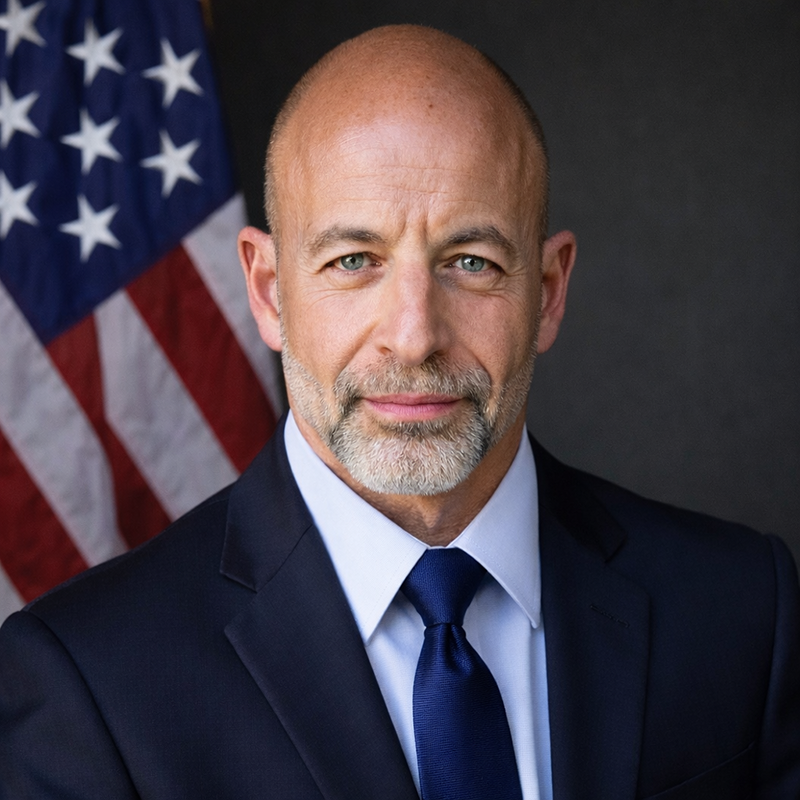
Dr. James Giordano is Head of the Center for Strategic Deterrence and Study of Weapons of Mass Destruction, and Program Lead for Disruptive Technology and Future Warfare of the Institute for National Strategic Studies at the National Defense University.