Irregular warfare (IW) is not a new phenomenon, although its contemporary character has been substantively reshaped by advancements in technology, and more specifically, by the developments in artificial intelligence (AI). Per the Joint Chiefs' previous definition, irregular warfare is a violent struggle between state and non-state actors for influence over a relevant population.1 While this was mostly accurate, it's important to note that IW is not always violent. This distinction underscores the breadth and subtlety of current tools and techniques of IW. As Chad Machiela and Seth Gray argue, Department of War (DoW) definitions can be imprecise, relying on characteristics like asymmetry that are present in both regular and irregular warfare. To remedy this, they propose using “state stewardship”, i.e., the level of state authority, entitlement, and responsibility, as the primary criterion by which to distinguish regular and irregular warfare.2
We believe this is an important caveat. Indeed, Department of Defense Instruction (DoDI) 3000.07 rather presciently suggested, and now reflects this clarification, and its attendant definitional shift, in its invocation that the Joint Force “maintain IW as a core competency,” and recognition of IW as a “form of warfare where states and non-state actors campaign to assure or coerce states or other groups through indirect, non-attributable, or asymmetric activities.” In that light, the mission of the joint force, alongside allies is to proactively “erode an adversary’s legitimacy, influence, and political will” while bolstering that of allies confronting acute coercion.3 However, absent clear labels, commanders may struggle to select the appropriate tactics and strategy for the mission.
Thus, rather than a binary state of engagement, IW is more accurately conceptualized on a spectrum of conflict that ranges across a continuum from non-kinetic to kinetic operations; with the most consequential, but most frequently underestimated activities executed in the non-kinetic domain. While kinetic IW typically entails overt aspects of violence (e.g., guerrilla operations, sabotage, assassination, and/or provision of material support to resistance, insurgents, or proxies), non-kinetic IW instead operates in the cognitive (i.e., informational, psychological, and sociopolitical) domains, where the center of gravity contains legitimacy, influence, and perception. Encompassing influence operations, disinformation campaigns, cyberattacks, economic coercion, narrative manipulation, and the deliberate exploitation of societal vulnerabilities and volatilities, these engagements can be articulated in a grey zone of hybrid activity that are deniable, ambiguous, legally ambiguous, and difficult to attribute. Increasingly, both state and non-state adversaries are showing preference for such operations, and it is in this space where AI is becoming both a force multiplier and weaponizable tool of considerable capacity.
AI as Amplifier and Articulation of Non-Kinetic Irregular Warfare
While state forces generally hold a force advantage, they often operate at an information disadvantage compared to irregular forces that are embedded within the population; AI can serve to bridge this gap, allowing for the processing of complex human-terrain data at the speed of relevance. The relevance and value of AI for IW is a function of a number of intersecting capabilities; these include: (1) large-scale data processing and pattern recognition; (2) facility with natural language generation; (3) predictive modeling functions, and (4) iterative autonomy in execution of complex tasks. These faculties map directly onto the objectives of non-kinetic IW, which are fundamentally cognitive; namely to modify and shape perception, degrade trust, weaken decision-making, and denigrate social cohesion and institutional confidence of target populations and power structure(s).
Executing these objectives entails three primary dimensions of IW engagement.
1. Cognitive and Informational Operations. Large language models (LLMs) and generative AI now allow adversaries to produce synthetic text, audio, imagery, and video media at industrial scale, with minimal labor, quickly, and at a fraction of prior costs. Deepfake technologies enable fabrication of statements by military and political leaders; AI-directed micro-targeting permits tailored dis/misinformation to be promulgated within specific demographic or psychographic cohorts with precision. Automation aids in the rapid, real-time shaping of what an opponent sees, hears, and thinks, thereby influencing a target to choose a path an adversary intended, and believing it instead to be of their own volition. The People’s Republic of China, Russian Federation, and a growing constellation of other states, as well as non-state actors have demonstrated operational proficiency in deploying such tools to affect electoral processes, civil discourse, and alliance cohesion.
2. Targeting Preparedness and Responsiveness. Non-kinetic IW is aimed at degrading the target’s capacity to effectively respond before, during, and after crisis. AI can contribute to this objective in at least three ways.
First, by enabling persistent intelligence collection and analysis through open-source intelligence aggregation, social media monitoring, and behavioral pattern analysis that can be used to identify key decision nodes, influence networks, and affect cognitive vulnerabilities within target individuals and collectives (e.g., militaries, societies, governments).
Second, AI-based cyber operations can probe and penetrate critical infrastructures, logistics networks, and command-and-control systems to modify and/or degrade operational readiness (at sub-kinetic levels).
Third, AI enables simulations and war-gaming of adversary responses to planned operations, thus allowing IW actors to plan and optimize the timing, framing, and vectoring of influence campaigns to maximize disruptive effect and tactical and/or strategic impact.
Importantly, this targeting logic is centered upon impairing the cognitive and organizational architecture and functions that are consonant or dissonant to existing dispositions and biases, which enable an adversary to observe, orient, decide, and act.
AI capabilities ultimately allow adversaries to gain strategic advantages by “compressing the time between sensing, shaping, and exploiting," while U.S. forces often remain constrained by approval latency and fragmented execution.4 This lowered barrier to entry is where Machiela’s Combatant State Stewardship Scale becomes especially crucial. Actors at the top of the scale (state officials) have high authority and responsibility, while those at the bottom (criminals, insurgents) often lack explicit state sponsorship and thus are irregular; because these irregular forces are less beholden to the state, they risk less when acting outside the community’s norms,” making AI-enables non-attributable attacks their preferred method for bypassing state level defenses.
3. Operational Accessibility and Deniability. AI also significantly lowers barriers to entry for sophisticated IW operations. What previously required state-level intelligence infrastructure (e.g., linguists, analysts, media production facilities, technical operators) can now be accomplished by modestly resourced actors leveraging commercially available AI platforms and tools. This democratization of IW capability expands the threat landscape beyond peer competitors to include regional powers, non-state actors, proxies, and transnational criminal organizations. Concomitantly, AI can enhance the deniability of operations; synthetic content and automated influence campaigns are making it increasingly difficult to discern, attribute, and thus leverage the evidentiary confidence required for military, legal and/or political responses.
The readiness implications of AI-enabled IW are evident. Military forces targeted through disinformation, social division, degraded morale, or fractured public trust can incur significant diminution of the capacity to recruit, train, retain and deploy. Further, allied cohesion, a foundational element of U.S. strategic posture, is also targetable. AI-enabled influence operations designed to exacerbate socio-cultural and/or political divisions within NATO member states are operationally consequential as they can create tensions that rupture collaborative architectures and functionality.
Given this reality, the question, and task at hand is what can — and should — joint force and its allies do to meet and engage the threat.
Next week: IW Part Two: Evolving Threat, Evolving Tasks — Proposed Approach(es) and Recommendations
Notes
1 U.S. Department of Defense, Irregular Warfare Joint Operating Concept (IW JOC), Version 1.0 (Washington, DC: Department of Defense, 2008).
2 Machiela, Chad, “Regular or Unleaded? Differentiating Irregular Warfare,” Small Wars Journal, February 19, 2026.
3 U.S. Department of Defense, Irregular Warfare (IW), DoD Instruction 3000.07 (Washington, DC: Office of the Under Secretary of Defense for Policy, September 29, 2025)
4 Walters, Ryan. "Information Warfare: The Army’s Continuous Transformation in Action," Small Wars Journal, January 15, 2026.
Disclaimer
The views and opinions expressed in this essay are those of the authors and do not necessarily reflect those of the United States government, Department of War or the National Defense University.
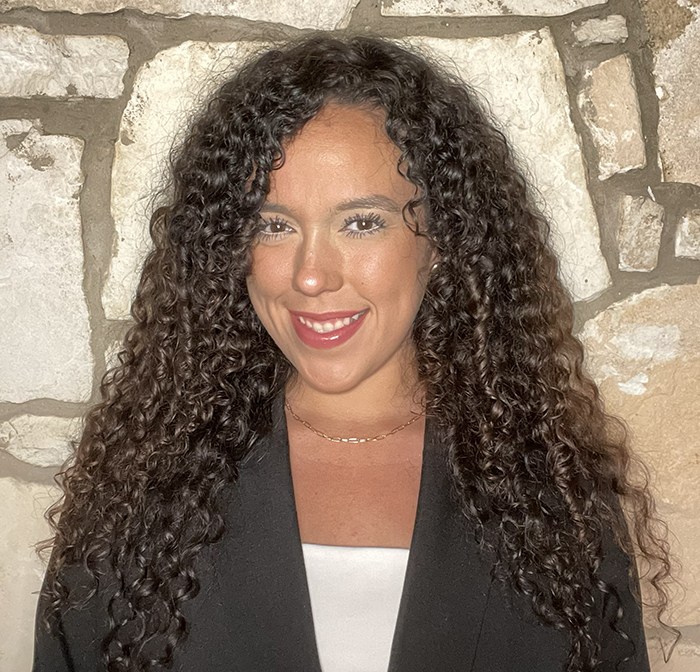
Jocelyn Garcia is a master’s degree candidate in the Global Security (Irregular Warfare) Program of Arizona State University, whose work focuses upon methods, mechanisms and effects of cognitive influence. She is also the Director of Strategic Communications at Small Wars Journal.
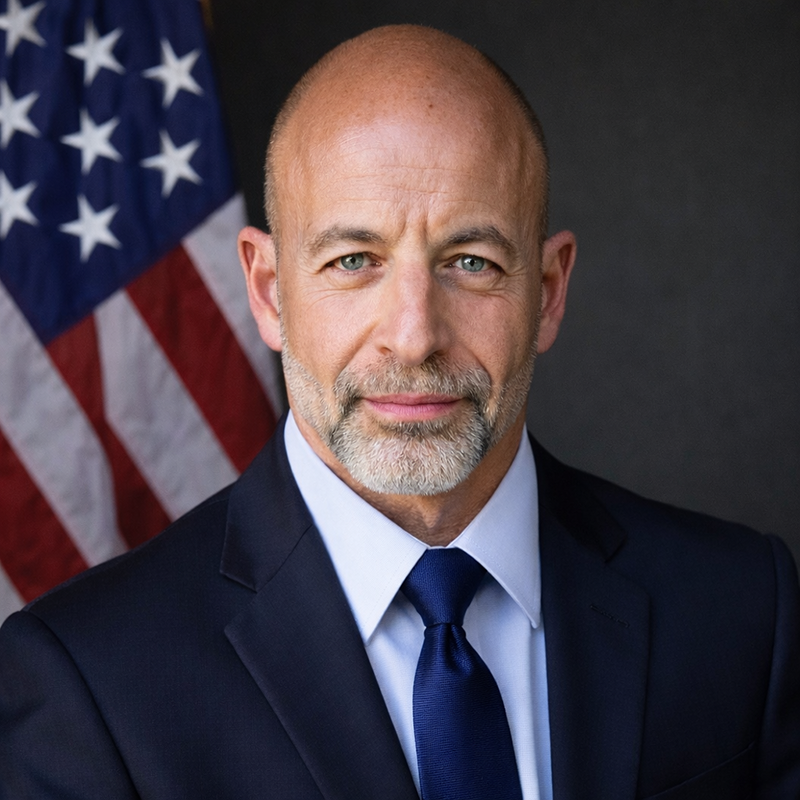
Dr. James Giordano is Head of the Center for Strategic Deterrence and Study of Weapons of Mass Destruction, and Program Lead for Disruptive Technology and Future Warfare of the Institute for National Strategic Studies at the National Defense University.